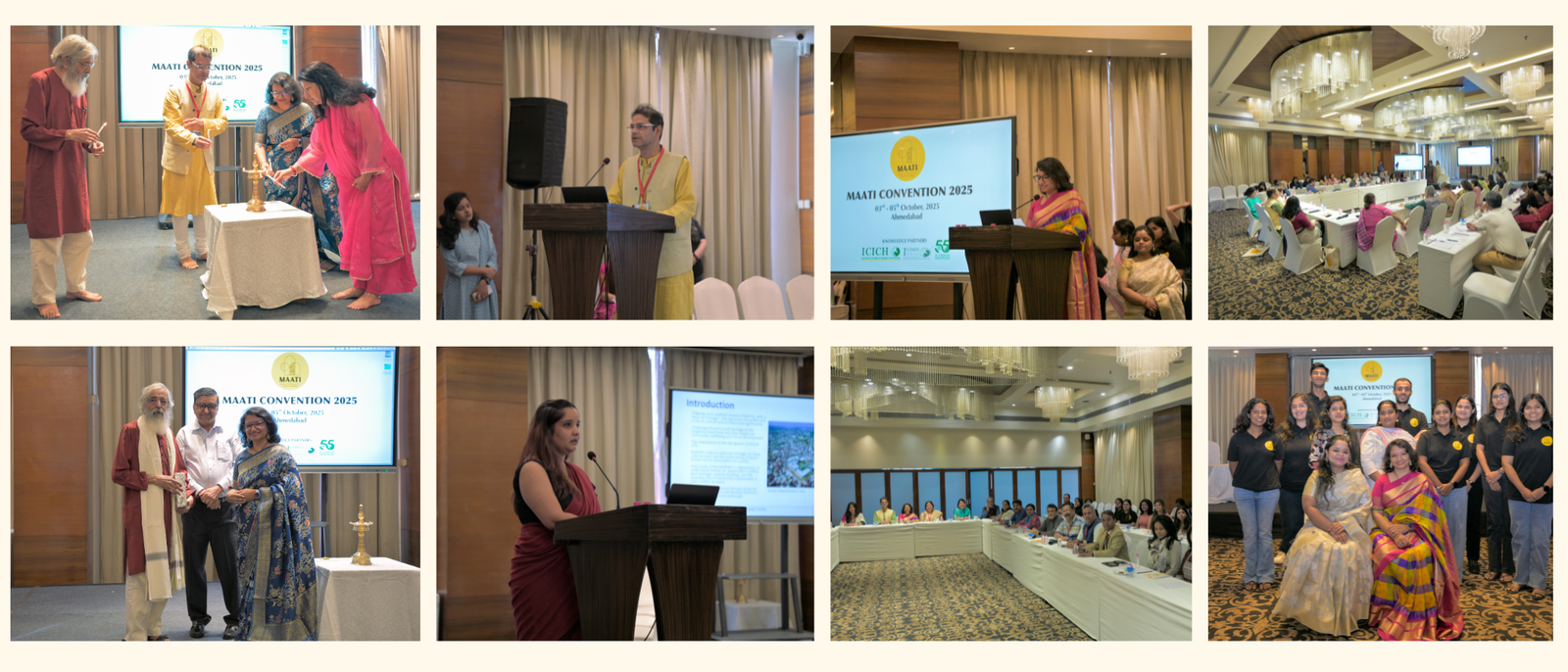
The heritage community turned its eyes to Ahmedabad, where the MAATI Convention 2025 took place at Radisson Blu Hotel. With the theme “Heritage Undiscovered: Debating the Unrecognised,” running from October 3rd to 5th, the convention made waves for its scale, intellectual depth, and unique leadership under MAATI an all-women team of conservators, historians, and architects. The convention was a groundbreaking initiative to draft a new guideline framework for heritage conservation in India.
A Distinguished Gathering
The event drew a remarkable gathering of over 55 participants, with many more joining virtually. Among the dignitaries were:
- Chief Guest: Prof. Neelkanth Chhaya, a celebrated architect and educator, who inspired participants with reflections on architecture’s deep cultural values.
- Keynote Speaker: Prof. Dr. Navin Piplani, conservation architect and former President of ICOMOS India, whose address set the tone for the convention with a call for policy-grounded heritage practice.
- International Delegate: Dr. Ana Lucia Gonzalez Ibañez, Vice-President of the International Centre for Intangible Cultural Heritage (ICICH), who joined virtually.
Also present as Guests of Honour were distinguished professionals, including Dr. Mrinalini Atrey, Dr. Nisar Khan, Dr. Sanghamitra Basu, Ms. Ananya Bhattacharya, Ms. Poonam Trambadia, Dr. Sanjib Borkakoti, Dr. Molly Kaushal, Mr. Ashish Trambadia, Mr. Dilip Changkakoty, Dr. Farhan Fazli, Dr. Ajay Khare, Dr. Venugopal, Ms. Kamalika Bose, Dr. Shikha Jain, Mr. G.V.S. Suryanarayan Murty, Dr. Niyati Jigyasu, Ar. Parul Patel, and Dr. Rima Hooja ensured the dialogue remained broad, inclusive, and international.
A Unique Convention for Heritage Futures
Through the introduction by Prof. Neeilkanth Chhaya, the keynote address by Prof. Navin Piplani, the visionary dialogue by Ar. Zarna Shah, panel discussions by various subject experts in the field of tangible and intangible cultural heritage, and paper presentations, the conference covered a range of topics, including Intangible and built heritage conservation practices, sustainable development, community engagement, and innovative technologies.
The event also provided a draft document and Paper presentations across eight sub-themes: from neglected histories and unrecognised heritage to frameworks for disaster resilience, education, and policy. For participants, it offered opportunities for networking, collaboration, and idea exchange.
Knowledge Partnerships and Global Spirit
The intellectual weight of the convention was strengthened by its knowledge partners the ICOMOS International Committee for Intangible Cultural Heritage (ICICH), the ICOMOS International Cultural Tourism Committee (ICTC), and ICOMOS India. Their involvement ensured the event remained aligned with global standards while rooted in local realities.